 Hr
Hr
Hr
Hr
1. Can you tell us something about the beginnings and motives behind your engagement in olive growing?
In my case, the key factor was complete ignorance of olive growing and agriculture in general, because only a big child with a full heart and an empty head can set out on such a long journey without knowledge, without capital, without a clear vision—just with two hoes and a lot, a lot of good will…
In 2006, I had just finished university, got a job, and was starting the kind of life predetermined for children born and raised on the ninth floor of a tower block in Zadar.
My parents had never been involved in agriculture and, after leaving their native villages in their youth, they never again thought of land or village life.
But inside me, there was a spark, a restlessness that pushed me toward our abandoned land, our abandoned village, a restlessness that drove me to try before the grass and forest swallowed it all forever.
The first plowing, the first excitement, the first holes, the first olive trees, the first pruning shears, the first disappointment, the first tractor, the first crates, the first nets, the first harvest, the first oil…
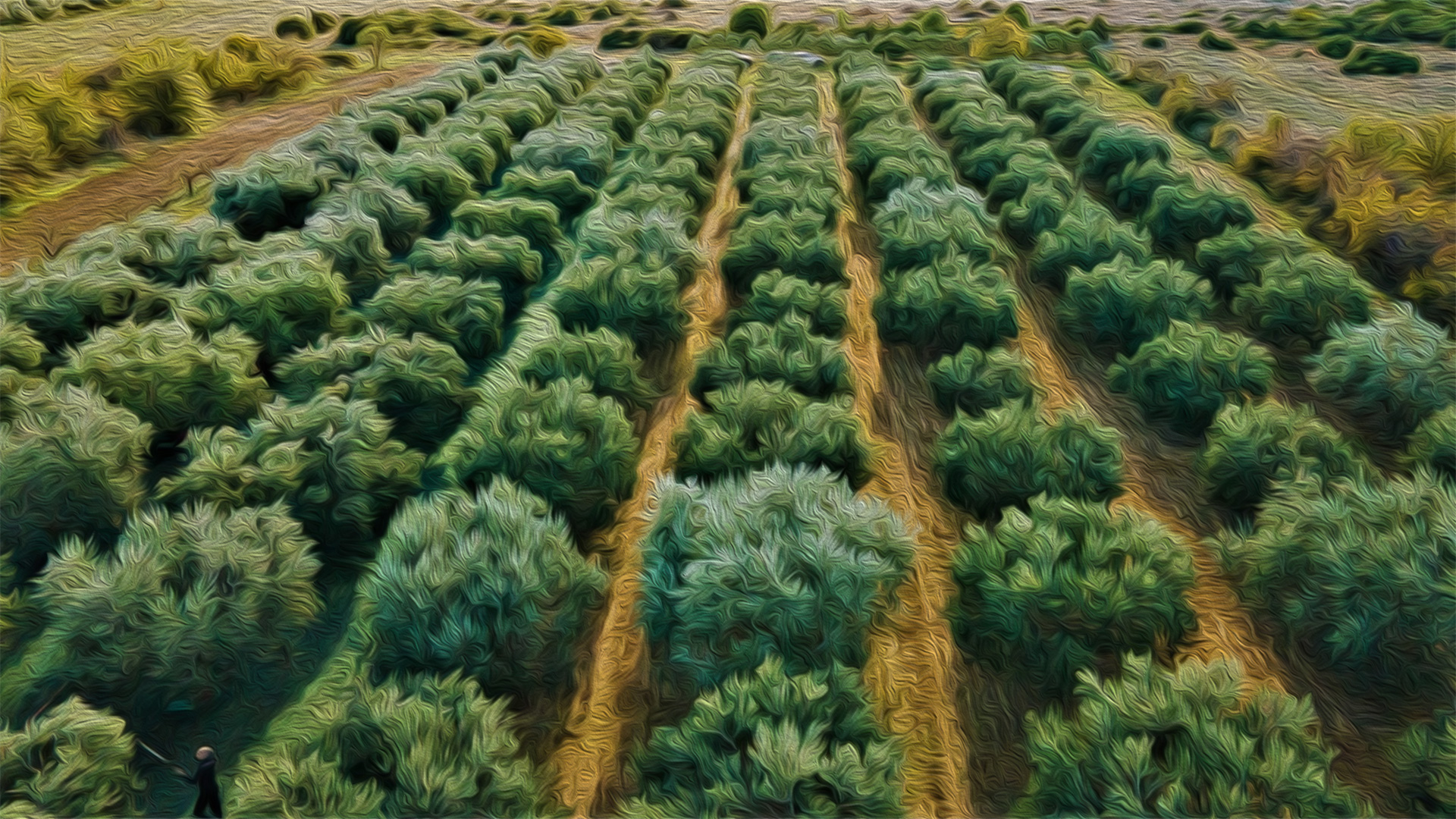
A long, long road, during which I planted almost 500 olive trees on 2.5 hectares of land, went from nothing to receiving the EU organic product certification, but along the way I also learned a lot about the land, olives, agriculture, and myself.
2. How much has changed from the beginning until today, both in your olive growing and globally?
Over these twenty or so years I have lived through change, every day was learning—and for that reason I would highlight knowledge.
Today, a much larger amount of knowledge is easily accessible to the average person—whether a beginner in olive growing, a serious olive grower, or a consumer of olive oil—for which your magazine surely deserves some credit.
On the global level, people’s awareness has significantly changed about the importance of organic farming, healthy nutrition, consumption of extra virgin olive oil, but also about the importance of the olive grower in that process—not only as a producer, but also as a caretaker of the land, olives, villages, and the Mediterranean way of life.
3. What are the advantages and disadvantages of olive growing?
Caring for the land of your ancestors, producing olive oil, teaching your children about the cycle of life, the smell of rain and grass, the feeling of freedom—which today may be farther away from people than ever before… I light up and smile at my own happiness when I think about the advantages.
Still, it’s not enough to love only the advantages. There is also a lot of physical work, often in the cold, rain, wind, sun. There is much uncertainty, no shortage of disappointments. But those “disadvantages” gave me a lot—they taught me patience, taught me the laws of nature, proved to me that persistent work pays off, showed me never to give up, and in the end made me proud to be able to call myself an olive grower.
4. Are there trends in olive growing, and if so, what are they?
(Early) harvesting, hybrid varieties, plantation-style cultivation, new pruning methods… These are being imposed on us—with more or less success—by larger, more powerful, and more influential olive-growing countries, with the aim of selling their products, whether oils, saplings, or machinery.
Through those pressures and through our learning—accepting the useful and rejecting the unnecessary—a Dalmatian/Croatian style of olive growing has gradually formed, one that goes hand in hand with nature, and I believe we are on the right path.
5. Which varieties do you prefer in your olive groves, and why?
Along with my first love, our native variety Oblica, which forms the basis of our olive groves, I am a great admirer of the Italian varieties Pendolino, Leccino, Coratina, and Frantoio. These five varieties make up our groves.
The Oblica tree is best adapted to our harsh soil, lack of water (and irrigation), as well as strong northern and southern winds. Its recognizable mild oil is given a special note and piquancy by the four mentioned gems of world olive growing.
6. Domestic or foreign varieties—and the pros and cons?
I think when planting trees, nationality matters less than adaptation to the conditions in which the tree has to live.
I support planting native varieties primarily because we know their characteristics in these conditions, but I would never give up the wonderful olive varieties offered by the Mediterranean basin, because I consider them part of the European—and therefore our own—ecological and cultural wealth.
7. Which of your own oils do you use at home, and with which dishes?
We believe in multi-varietal extra virgin olive oil, and that is what our oil AZ is. The combination of the previously mentioned varieties gives an oil of golden-green color, recognizable taste, and unforgettable aroma, and it is the only oil we use at home.
8. What is the future of Croatian and global olive growing?
While global olive growing is already living its future—a future I do not like, reducing olive trees and olive oil to raw material—I hope we will manage to preserve our romantic approach.
At the same time, we olive oil producers must ensure that Croatian olive oil does not become priced out of reach for the average citizen of the Republic of Croatia.
If we succeed in maintaining that balance, I believe the future belongs not only to us, but to all small organic producers worldwide.
9. What are your short-term and long-term plans?
Today, when all the land cultivated by my ancestors is covered with olive trees, I want to devote myself more to revitalizing our village of Zagrad.
I want to try to connect olive growing with tourism and allow a wider circle of people to discover not only the charm of extra virgin olive oil, but also the joy of living in harmony with nature in general.
That will fulfill my dreams, and everything beyond depends on my children.
If one of the three of them feels the same restlessness I once felt, then we will take serious steps to make olive growing our primary activity.
10. What advice would you give to someone just starting out in olive growing?
Dream, learn, work, and enjoy the journey—because in the end, in olive growing there are far more sunny than rainy days…
https://www.maslinar.com/maslinari-deset-pitanja-za-kresimira-atelja/


